
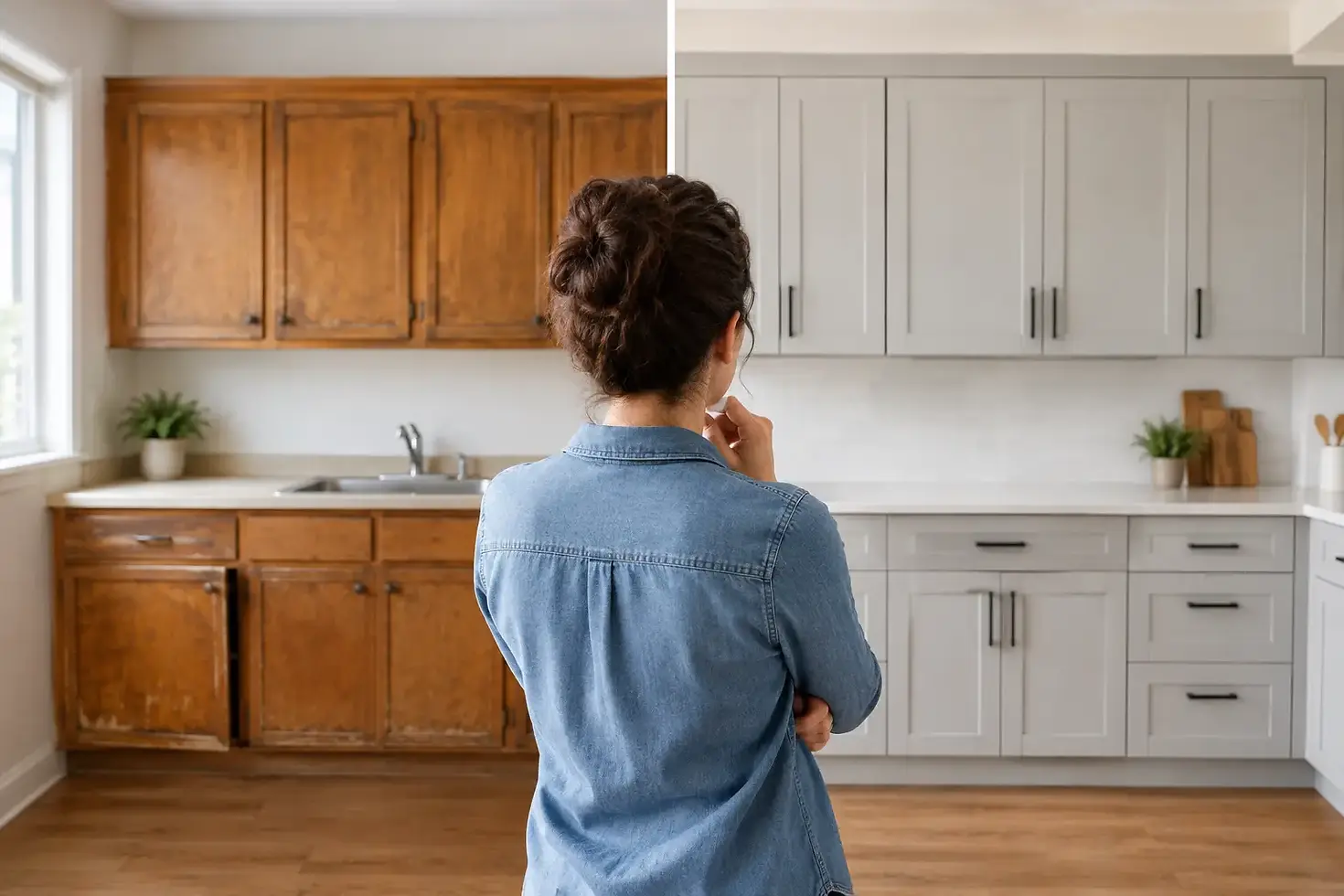
Repair vs Replace Kitchen Cabinets: Which Pays?
A sticky drawer, chipped finish, or dated oak door does not automatically mean your kitchen needs a full cabinet replacement. But cabinets also do far more than set the visual tone of the room. They support countertops, store daily essentials, and shape how efficiently your kitchen works. The repair vs replace kitchen cabinets decision comes down to the condition of the cabinet boxes, the changes you want to make, and whether a short-term fix supports your larger plans for the home.
For many homeowners, the best choice is not obvious at first glance. A cabinet can look worn while remaining structurally sound. On the other hand, fresh paint and new hardware cannot solve water damage, weak construction, or a layout that makes everyday cooking frustrating. Looking beyond the doors is the key to making a smart investment.
Start With the Cabinet Boxes, Not the Finish
Cabinet doors get the attention because they are visible, but the boxes tell the real story. If they are level, securely attached to the wall, dry, and built from durable material, repair or refinishing may be a worthwhile option. Solid wood or quality plywood boxes often have years of useful life left.
Open several cabinets and inspect the interior corners, shelves, and area beneath the sink. Swelling, crumbling particleboard, peeling laminate, soft spots, or a persistent musty smell can point to moisture damage. In Austin homes, a slow plumbing leak under the sink can create more damage than homeowners realize until they pull everything out for a closer look.
Also consider how the doors and drawers operate. Loose hinges, misaligned doors, worn drawer glides, and broken pulls are usually repairable. Those are hardware issues, not proof that the entire cabinet system has failed. A skilled repair can restore smooth function without the cost and disruption of replacing every cabinet.
When Repairing Kitchen Cabinets Makes Sense
Cabinet repair is often the practical choice when the kitchen layout works, the boxes are in good shape, and the problems are isolated. It can address normal wear without turning a manageable project into a full remodel.
Repairs may include securing loose cabinets, replacing damaged doors or drawer fronts, adjusting hinges, installing new drawer slides, repairing minor wood damage, or correcting cabinet alignment. Refinishing or repainting can also change the kitchen's appearance significantly when the existing cabinet material is suitable for the process.
This approach can be especially valuable if you plan to update other elements. New countertops, a backsplash, lighting, and hardware can give a well-built cabinet system a substantially different look. If storage is adequate and the work triangle between the sink, range, and refrigerator functions well, keeping the cabinets may protect more of your budget for the upgrades that will make the biggest daily difference.
Repair is not always the least expensive path, however. Custom color matching, extensive veneer repair, multiple replacement doors, and specialty hardware can add up. The goal is not simply to choose the lowest initial price. It is to choose work that delivers reliable function and a finished look you will still appreciate a few years from now.
Repairs are a good fit when:
The cabinet boxes are stable and dry, the damage is limited to a few areas, and you like the basic kitchen layout. They are also a strong option for homeowners who want to refresh their space before selling or who are planning a more extensive remodel later.
When Replacement Is the Better Investment
Replacement becomes the better choice when cabinet problems are structural, widespread, or tied to an outdated layout. If the boxes have major water damage, shelves are sagging, cabinets are pulling from the wall, or the construction is low-grade particleboard that has begun to break down, repairs may only delay a larger expense.
A full replacement also gives you the opportunity to solve issues that repairs cannot touch. Perhaps the kitchen lacks pantry storage, has too little counter space, or forces family members to cross paths in a narrow work area. New cabinets can create deeper drawers, organized pullouts, a better pantry, a dedicated trash cabinet, or a more functional island. These changes improve how the kitchen works every day, not just how it looks.
Replacement is also worth considering if you are making major changes to plumbing, electrical, flooring, or appliance locations. Trying to preserve old cabinets while moving walls or reworking the layout can create compromises that are not worth the savings. Coordinating these decisions at the beginning of a remodel helps prevent costly revisions after work has started.
New cabinets usually require a larger investment and a longer project scope. They may involve demolition, countertop removal, wall repairs, and new finish work. A clear plan, accurate measurements, and transparent pricing matter because cabinet work affects nearly every part of the kitchen.
Repair vs Replace Kitchen Cabinets: Questions to Ask
Before deciding, focus on the answers that affect your home rather than choosing based on appearance alone. Ask whether the cabinets are structurally sound, whether the layout supports the way your household uses the kitchen, and whether the planned improvements will still make sense if you stay in the home for several more years.
It also helps to be honest about your priorities. If your goal is a fresh look with minimal disruption, repair, refacing, or refinishing may meet the need. If your goal is a kitchen that accommodates a growing family, improves storage, supports entertaining, or matches a full-home renovation, replacement may deliver more lasting value.
A professional assessment can separate cosmetic issues from construction concerns. It should also identify related work that affects the budget, such as subfloor repairs, electrical updates, plumbing changes, drywall repair, or countertop replacement. Knowing those details before the work begins makes the decision more predictable and reduces the risk of unwelcome surprises.
Consider the Middle Ground: Refacing or Selective Replacement
You do not always have to choose between a minor repair and a complete cabinet tear-out. Cabinet refacing can be an effective middle option when the boxes are sound but the doors and visible exterior surfaces are dated. It typically involves replacing doors and drawer fronts while covering the cabinet frames to create a coordinated new finish.
Selective replacement may also work in certain kitchens. For example, a damaged sink base can sometimes be replaced while surrounding cabinets are preserved, or a new pantry cabinet can be added to improve storage. This approach requires careful planning to make sure sizes, finishes, and installation details work together.
These options can offer meaningful visual improvement, but they are not right for every cabinet type or layout. They also do not correct poor traffic flow, inadequate countertop space, or deteriorating boxes elsewhere in the kitchen. A straightforward conversation about your goals and budget is more valuable than pushing a solution that does not fit the space.
Plan for the Cost Beyond the Cabinets
Cabinet decisions rarely stand alone. Repairing cabinets may require paint, trim work, new hardware, and countertop adjustments. Replacing them can lead to decisions about flooring transitions, backsplash height, appliance clearances, lighting, and wall finishes.
This is why a detailed scope matters. A dependable remodeling partner should explain what is included, what may be uncovered during demolition, and where you have choices that affect the final price. Clear communication is particularly important in a kitchen, where a small change can influence several connected trades.
Redesign Remodeling LLC helps Austin-area homeowners weigh these options based on the actual condition of the kitchen and the result they want to achieve. The right recommendation should fit your priorities, not force every project into a full replacement.
If your cabinets are solid, a thoughtful repair can extend their life and give the room a welcome reset. If they are failing or holding back a kitchen that no longer works for your family, replacement can be the point where daily frustration turns into a space you genuinely enjoy using.


Comments