

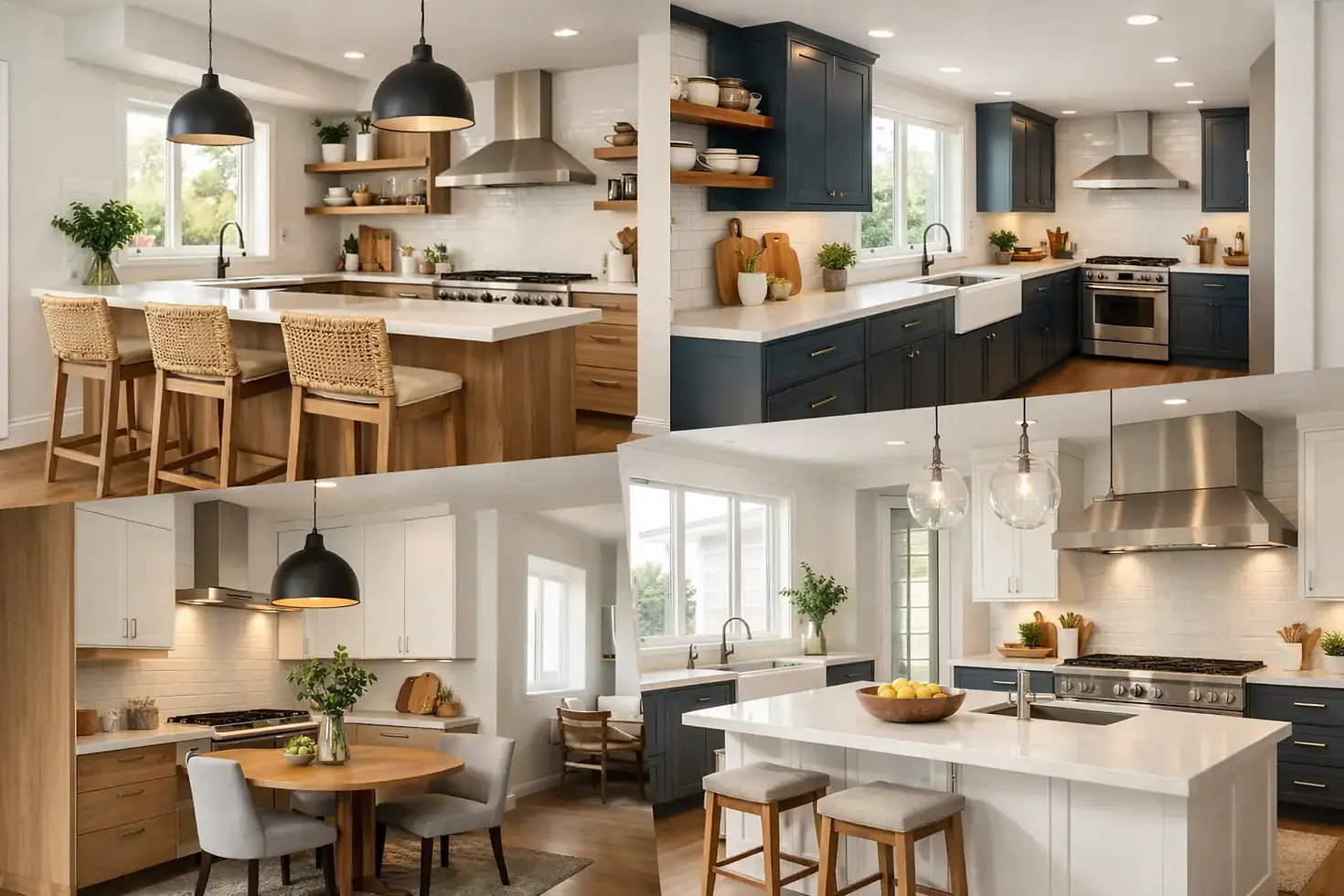
9 Best Kitchen Layout Ideas for Real Homes
- redesignatx
- Jun 1
- 6 min read
A kitchen can look beautiful in photos and still feel frustrating the moment you start cooking in it. The problem usually is not the cabinet color or the countertop material. It is the layout. The best kitchen layout ideas start with how you move, where you store things, and how your kitchen needs to work on an ordinary Tuesday night.
For most homeowners, the right layout is the one that reduces traffic problems, improves storage, and makes the room easier to use without forcing a design that does not fit the house. That is especially true when you are remodeling, because layout decisions affect plumbing, electrical, structural work, budget, and timeline. A smart plan looks good, but it also makes everyday life easier.
How to choose the best kitchen layout ideas
Before looking at shapes and floor plans, it helps to think about how the kitchen is actually used. A family that needs room for homework and quick meals may need something very different from a homeowner who loves to entertain. A compact kitchen in an older home may call for efficiency first, while a larger open-concept remodel can support more than one work zone.
Three things usually matter most: workflow, storage, and circulation. Workflow covers the path between the sink, refrigerator, and range. Storage means making sure dishes, pantry items, cookware, and small appliances have logical homes. Circulation is about keeping people moving through the space without cutting through the main cooking area.
That balance is where many remodels either succeed or create new headaches. A large island sounds appealing, for example, but not if it leaves tight walkways. More cabinets can help, but not if they make corners awkward or block natural light. Good layout planning is less about copying a trend and more about fitting the room to the way you live.
1. The galley kitchen layout
A galley kitchen uses two parallel runs of cabinets and appliances with a walkway in between. In smaller homes, this can be one of the most efficient layouts available because everything stays close at hand.
When designed well, a galley kitchen minimizes extra steps and uses wall space effectively. It often works especially well in condos, townhomes, and older homes where the footprint is already set. If one side handles cooking and prep while the other side handles storage and cleanup, the space can feel surprisingly functional.
The trade-off is that galley kitchens can feel narrow if the aisle is too tight or if multiple people try to work at once. Opening one side to an adjacent dining or living area can help, but that depends on structure and budget.
2. The L-shaped kitchen
The L-shaped layout is one of the most flexible options for everyday family use. It places cabinets and appliances along two connected walls, leaving the rest of the room more open.
This layout tends to work well in medium-size kitchens because it creates a natural work zone without closing off the room. It also leaves space for a dining table or island, depending on the footprint. For homeowners who want a kitchen that feels open but still organized, an L-shape is often a strong choice.
Its main limitation is corner storage. Corners can become wasted space without the right cabinet solutions. Still, for many remodels, this is one of the best kitchen layout ideas because it supports both function and flexibility.
3. The U-shaped kitchen
A U-shaped kitchen wraps around three sides, offering generous counter space and storage. If you cook often or want strong separation between the kitchen and nearby living areas, this layout can be extremely practical.
The big advantage is that prep, cooking, and cleanup can each have dedicated zones. That makes the space easier to organize and often reduces clutter on the counters. It can also support more than one cook better than some smaller layouts.
The caution here is crowding. If the room is too small, a U-shape can feel boxed in. In some remodels, removing upper cabinets on one wall or opening one side visually to another room helps the kitchen feel lighter without losing functionality.
4. The one-wall kitchen
In a one-wall kitchen, everything lines up along a single wall. This layout is common in smaller homes, guest houses, and open-plan spaces where simplicity matters.
A one-wall design can look clean and modern, and it keeps the footprint compact. It is often a smart solution when you want to maximize adjacent living space or work within an existing room without major structural changes.
The challenge is storage and counter space. Because everything is compressed, each cabinet and appliance choice matters more. Tall pantry storage, smart drawer organization, and a nearby island or table can make this layout much more useful.
5. The island-centered kitchen
An island-centered kitchen is less about a specific wall configuration and more about how the room functions around a central workspace. This is one of the most requested layout features in modern remodels, and for good reason.
A well-sized island can add prep space, seating, storage, and visual definition in an open-concept home. It can also improve traffic flow by giving guests or family members a place to gather outside the main cooking zone.
Still, bigger is not always better. An oversized island can interrupt movement, especially if refrigerator doors, dishwashers, or oven doors compete for clearance. The island should solve problems, not create them. In many homes, a modest island with strong function works better than a dramatic one that overwhelms the room.
6. The peninsula kitchen
If you want some of the benefits of an island but do not have the square footage, a peninsula can be a smart alternative. A peninsula connects to a wall or cabinet run on one side and extends into the room.
This layout can help define the kitchen, add seating, and increase prep space without requiring as much clearance as a full island. It is especially useful in remodels where the room cannot support open circulation on all four sides of an island.
The downside is that a peninsula can create a pinch point if not planned carefully. It works best when the surrounding paths are still comfortable and appliance access stays clear.
7. The eat-in kitchen layout
For many families, the kitchen is more than a cooking space. It is where people gather before school, sort mail, answer emails, and eat casual meals. An eat-in layout builds that daily use into the plan.
This could mean space for a breakfast nook, a built-in banquette, or seating integrated into an island or peninsula. The best version depends on the room size and how formal your separate dining space is.
What matters is avoiding a cramped arrangement. Seating should feel intentional, not squeezed into leftover space. When done right, an eat-in kitchen supports the way people actually live, which often makes it more valuable than a layout designed only for appearances.
8. The open-concept kitchen
An open-concept kitchen connects directly to nearby living and dining spaces. Many homeowners like this layout because it creates better sightlines, easier entertaining, and a more connected feel throughout the home.
This approach can work especially well during a full remodel when walls are being reconsidered anyway. In some Austin homes, opening the kitchen can also improve natural light and make an older floor plan feel more current.
But open concept is not automatically better. Removing walls can reduce upper cabinet space, expose kitchen mess to the rest of the home, and increase noise. If your household values separation and quiet, a partially open layout may be the better fit.
9. The zoned kitchen for busy households
Some of the best kitchen layout ideas do not fit into a simple shape. They are built around zones. This approach works well for larger kitchens and for households where several activities happen at once.
A zoned kitchen may include a prep area near the sink, a cooking area around the range, a coffee station away from the main work triangle, and a snack or microwave zone that kids can access without walking through the cooking path. The layout still needs to feel unified, but zoning can make a kitchen far more efficient.
This is often where personalized design matters most. A baker may want counter space near a wall oven and pantry storage for ingredients. A family may care more about a landing zone near the refrigerator and durable surfaces that handle heavy daily use. A good remodel matches the zones to the people using them.
What usually makes a layout work better
No matter which plan you choose, a few details have an outsized impact. Walkway width matters more than many homeowners expect. So does landing space beside key appliances. Trash and recycling placement, drawer storage near prep areas, and pantry access all affect how smooth the kitchen feels.
Lighting also supports the layout. A great floor plan can still fall short if task lighting is weak or if the island becomes a shadowed work area. The same goes for ventilation. These are the behind-the-scenes choices that influence daily comfort.
Budget matters too. Moving plumbing, gas lines, or major electrical can be worth it when the existing kitchen truly does not function, but not every improvement requires a complete relocation of everything. Sometimes the best results come from keeping the basic footprint and improving storage, circulation, and work zones within it.
A well-planned kitchen should feel easy to use, easy to maintain, and right for your home. If you are weighing layout options, the goal is not to pick the most popular design. It is to choose the one that supports your routines now and still makes sense years from today.


Comments